For product, growth & PMM teams in form software

How well do you know your competitors?

We mapped one form builder's public journey from acquisition to activation to monetization. The company name is hidden. See how quickly you can identify them—and what their funnel reveals.

Can you identify the company?

Reveal as few clues as you need.
Clue 1 of 4
You can start building a form before creating an account.
Pick one.
Identity revealed

It’s Tally.

If Tally is in your competitive set, identifying the company is only the first layer. The useful question is: what is the funnel telling you about how they compete?

The thing we’d want a competitor team to know: Tally's public experience consistently reduces friction up front, delays registration until Publish, keeps free output branded, and then monetizes professionalization.
The Redframe read

Free may be part of the acquisition engine—not just the pricing model.

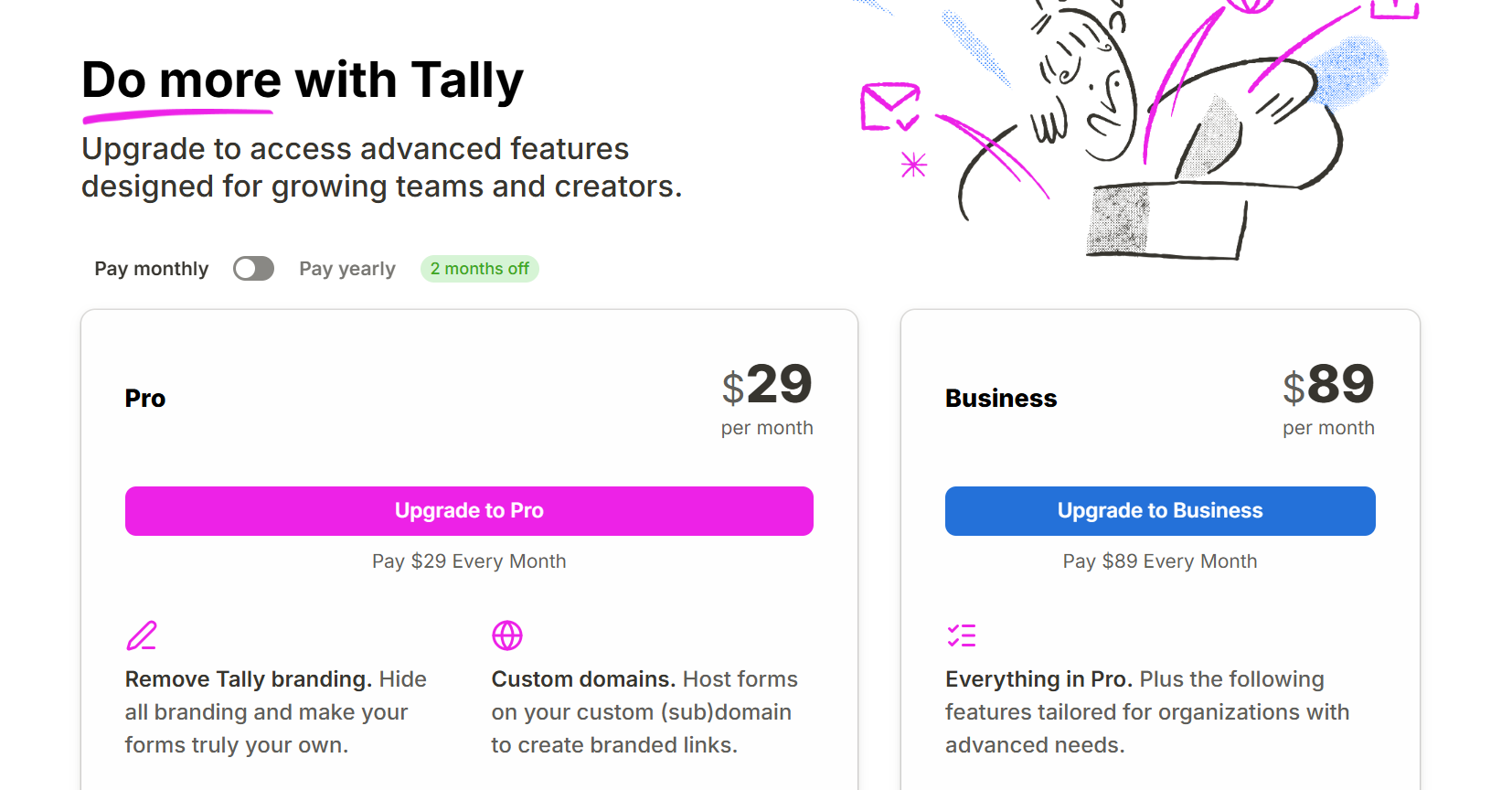
Tally lets users create for free, puts Tally branding on the public experience, and explicitly asks new users whether they discovered Tally by filling in a Tally form. Pro then offers removal of that branding.

Create for free
Public form carries Tally branding
Other people encounter the product
Onboarding measures “Filled-in a Tally form”
Pro offers branding removal
$29/month in observed upgrade screen
This is an interpretation of observed public signals—not a claim about Tally's internal growth model.
The public evidence

What a competitor can actually observe.

These are public product and marketing touchpoints. The value is connecting them into a competitive read your team can use.

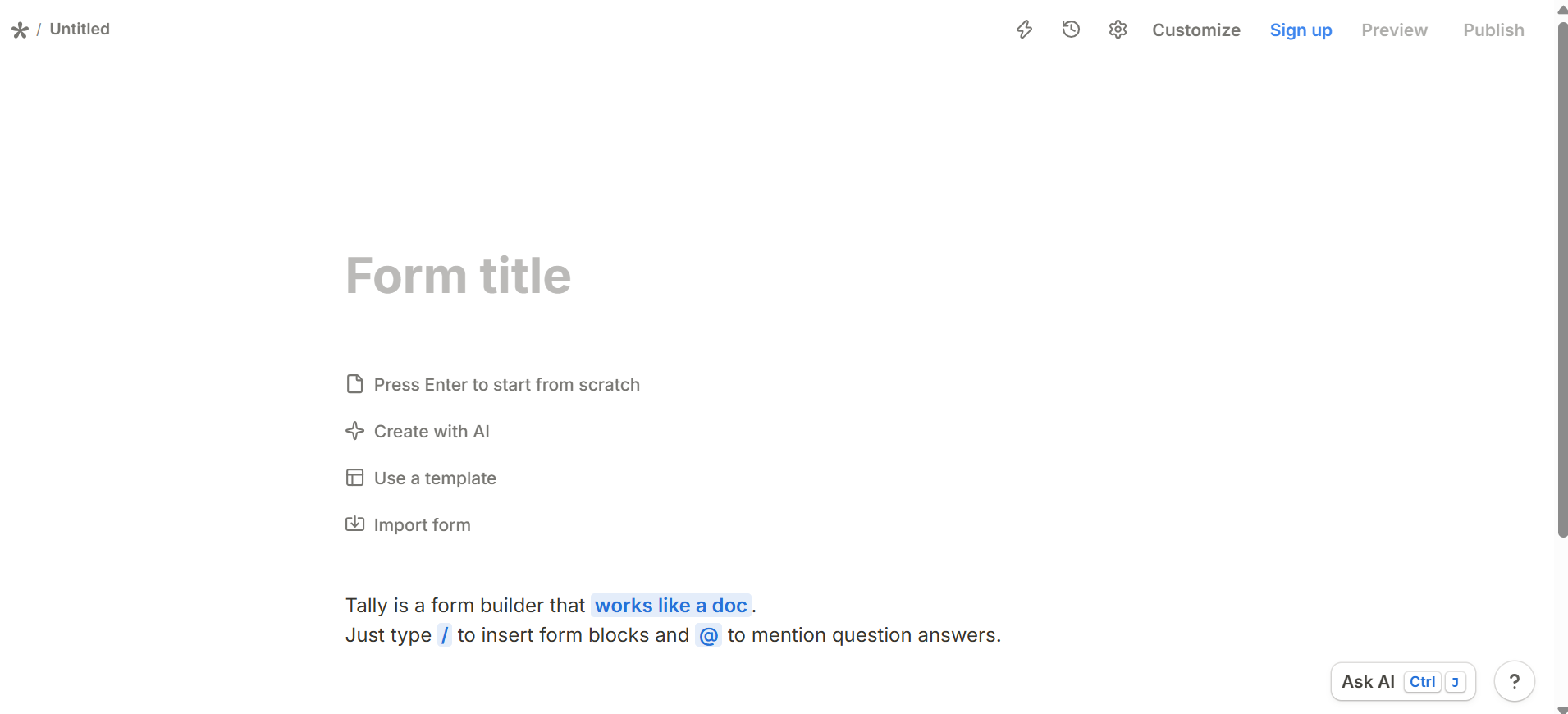
Tally editor shown immediately after the main CTA

1. Product before signup

The main CTA drops visitors directly into the editor.
Competitive signal: Tally is willing to let prospects experience core value before asking for identity.
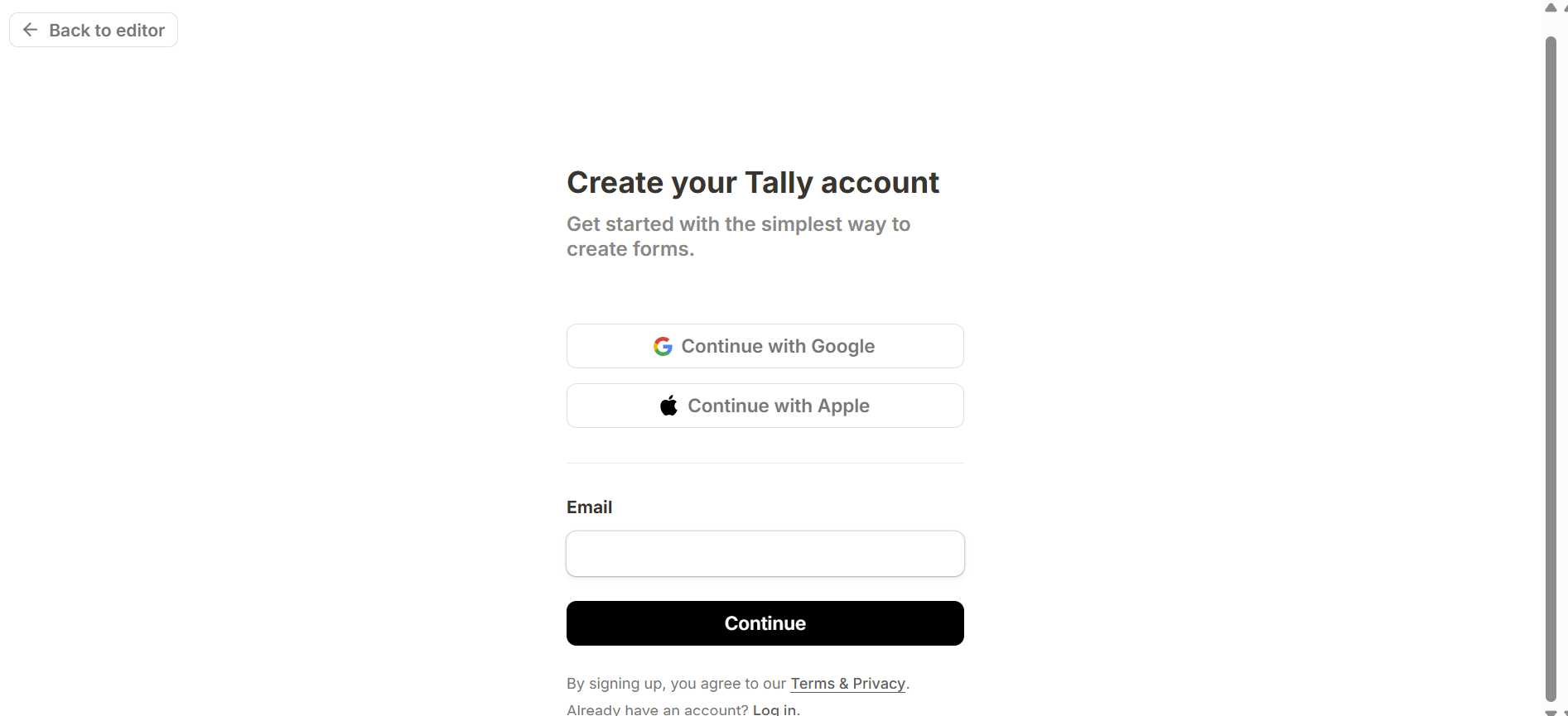
Tally account creation screen

2. Registration waits until Publish

Users can build and preview first. Account creation appears when they try to publish.
Competitive signal: friction is pushed later in the activation journey.
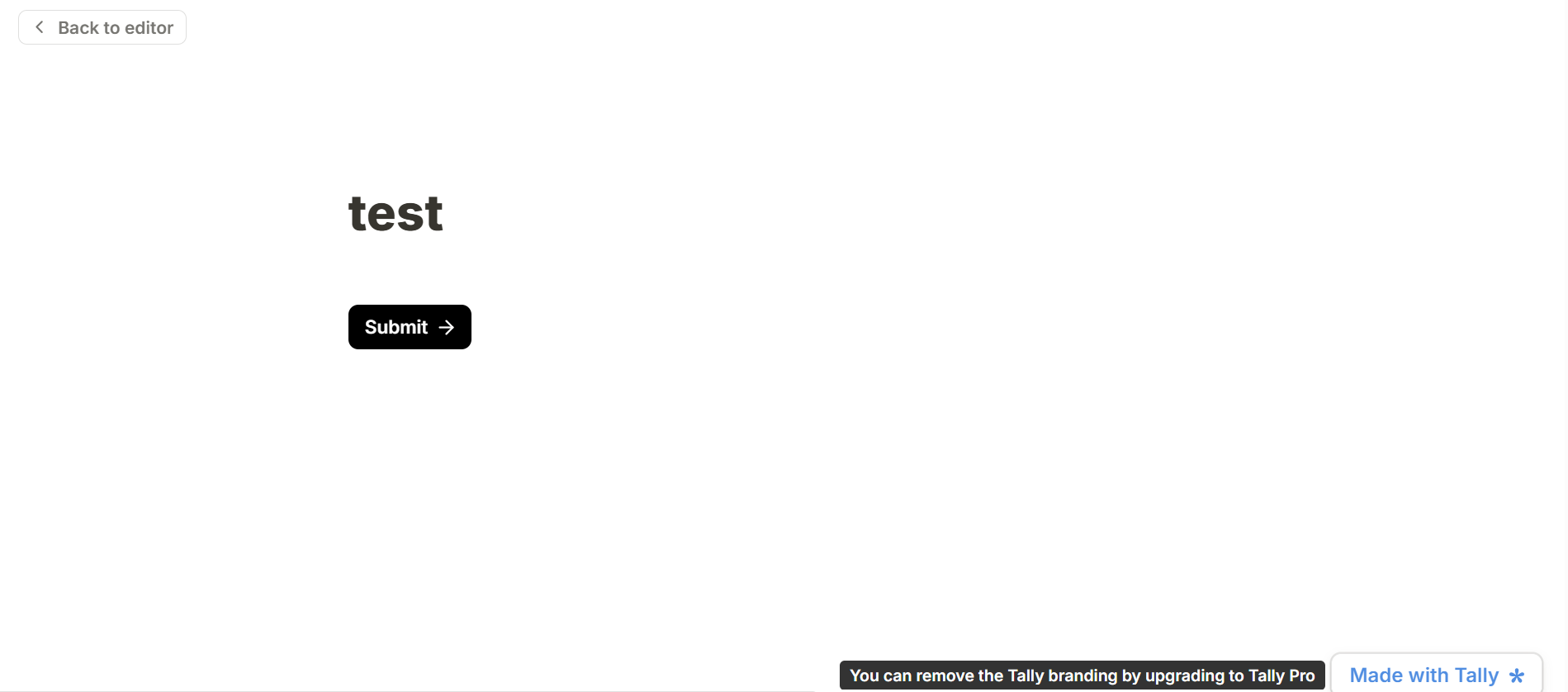
Made with Tally branding and upgrade message

3. Free output carries Tally

“Made with Tally” is visible in the form experience, with a contextual Pro upsell to remove it.
Competitive signal: free usage can create brand exposure while Pro monetizes control.
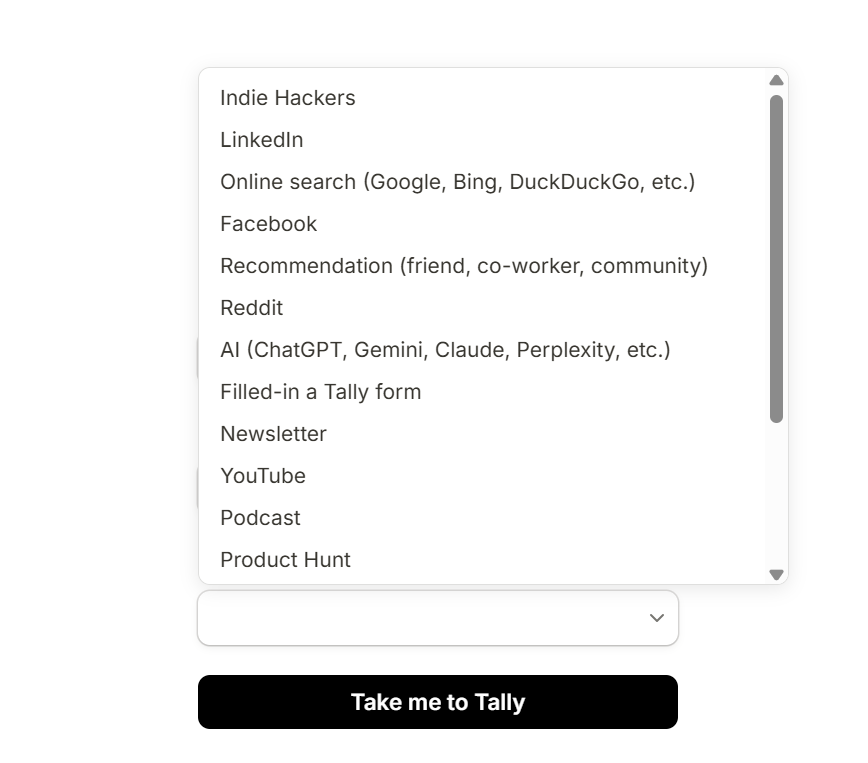
Tally acquisition source dropdown

4. They measure product-led discovery

Onboarding includes “Filled-in a Tally form” as an acquisition source, alongside search, LinkedIn, recommendations, AI tools and others.
Competitive signal: Tally explicitly tracks whether exposure to someone else's form contributes to acquisition.
Tally Pro and Business pricing

5. Paid starts with professionalization

Pro leads with removing Tally branding and custom domains. Business is framed around more advanced organizational needs.

Competitive signal: Tally gives away a lot of creation value, then charges for brand control and organizational depth.
Why this matters

A screenshot tells you what changed. A connected journey tells you what the company may be trying to do.

That second layer is the intelligence.

The real test

Would your team notice if Tally changed this funnel next week?

A new signup gate. A different free-tier restriction. A pricing change. A new competitor page. A shift in onboarding attribution. Those changes are public—but somebody still has to notice, connect and interpret them.

Redframe

Know what your competitors are changing before the insight goes stale.

Redframe tracks public competitor journeys across positioning, acquisition, signup, onboarding and monetization—and surfaces the changes that matter.